Middle East News Analysis
A column in the London-based al-Hayat (4/28/06) by Raghida Dirgham talks about Arab options in the face of the “Iranian Challenge”. The article warns of a possible Iranian-Israeli nuclear axis in the future, which is clearly a far-fetched alliance at this time. It warns of- I am using my own words here interpreting her stated concerns- “a tri-polar power structure in the Middle East, a triangle of regional superpowers with its vertices being Iran, Israel, and Turkey”.
That is also a needless worry, for Turkey is covered by the nuclear umbrella of Nato and does not need a costly nuclear program (but then again, nor does Iran). Besides, Turkey is now firmly facing west, for the time being, obsessed with the idea of joining the European Union, although that idea is opposed by some ‘Old Europe’ powers whose nightmares, it seems, include hjiab-clad Moslem women at Brussels and Strasbourg.
It notes the warm Iranian reception for the leader of Sudan, even while the country is involved in genocide in Darfur. It also notes that the Arab leaders held their last summit in Sudan, hence blessing the Sudanese stand in Darfur. The column suggests that perhaps there is a sinister and ‘disgusting’ racist reason behind the Arabs’ silent and tacit approval of the genocide- that the Arabs have been at best silent about the mass genocide in Darfur (near 500,000 killed so far, which might reach a million soon) because the victims are “African” blacks. She probably has a good point there: after all, if one hundred thousand were killed in Cairo or Damascus, the Arab reaction would have been quite different (notice all the hand-wringing over the violence in Iraq?).
The Arab Media opinion seems scattered over this Iranian issue. Those in the Persian Gulf region are strongly opposed to it, partly out of legitimate concern over the dangers of proliferation and the potential for a regional Chernobyl, which is my own point of view as well. But there is also another reason and it is based on the normal sense of historic rivalry between two neighboring cultures and peoples. For example, it is not likely that many in the Gulf would worry as much about an Egyptian nuclear program. Those in Arab countries farther away from the Gulf seem to divide into two camps: one grudgingly accepts the Iranian program, even admires it, while another camp thinks it is almost a fait accompli that nobody can stop in the current international environment. That last one is, unfortunately, my own point of view as well and I sense that it is the prevalent in the Middle East. Warnings of dire international consequences are sounding more hollow with each passing day, but, then again, the past three years have been a period of surprises.
Where most Arab commentators go wrong is that they look at the Iranian program as a challenge to the Arab World. It is, but not a direct one: an Arab challenge is not visible within the radar sight of Iranian strategists and policy makers. The Iran-Iraq War was the last challenge the Arab world posed to Iran, and at that time the result of that war looked like a short-term stalemate, but now we know that it was in fact a resounding long-term Iranian strategic victory. Just look at the regional balance of power since the end of that war.
The Iranians seem to have discounted the possibility of an Arab military challenge for the foreseeable future and set their sights (within the region) on the United States and Israel. They do not seem to consider the whole vast Arab World as a worthy or equal challenger. Unfortunately this is a logical position for them to take, for the Arab World seems to be listless and fragmented, and most of it poses no serious military threat to anyone except their own peoples. Still, the Iranians will be careful: they know that the richest chunk of the Arab World, from the Gulf to the Nile is firmly under the American umbrella now. They know that in spite of, or perhaps because of, all the violent campaigns of various militant and terrorist Arab organizations, including al-Qaeda, Hizbullah, al-Jihad, etc, the Americans are more firmly entrenched in the region than ever.
Asharq Alawsat, also from London, talks about the politics of Iraq (notice how the most interesting Arab media are based outside the Arab World, perhaps with the exception of Iraq). The paper claims that the Kurds are insisting on holding onto the Foreign Ministry post, while the Shi’as are reluctant to give up the Defense Ministry to a Sunni. Of course all this could be part of the posturing and bargaining.
Iraq’s National Security Adviser Mawffaq al-Rubaie said that Iraq has a plan for US troops to start to pulling out this year, and that the process will take two years.
The UAE has severely restricted issuing new company licenses, with an eye to the ‘negative effects on the liquidity of the stock market’, according to the Minister of the Economy.
This has been a week of some weird news from the Gulf (Persian Gulf, not the Gulf of Mexico). A most unusual new item spread in the Arab press over the past two days: a report in the Israeli newspaper Yedioth Ahronot copied all over the Middle East now that establishing Kuwait Airways in 1954 was part of a plan by Israel so that some pilots who were Jewish spies could fly easily to Cairo. According to a former Israeli minister who was in charge of espionage, two Israeli spies who were also US citizens approached the rulers of Kuwait with the idea of establishing an airline. The two were pilots, both veterans of the first Arab-Israeli war (what we call The Palestine War), were then able to fly freely to Cairo three times a week right under the nose of Nasser’s government. The Israeli newspaper claimed that once it was time to end the operation, the two agents, who also had shares in the company, sold their share in the airline to Kuwait. The airline’s spokesman has categorically denied the report, claiming that Kuwait Airways did not have American pilots, that all its pilots at the time were British (on loan from the old BOAC, which is now called BA). O.K they were British, but were they veterans of the first Palestine War?
On a lighter note, perhaps, another unusual news item, also involving Kuwait: reports in the Arab media have talked of the theft of 450,000 dollars from the hotel room of Palestinian Foreign Minister Mahmoud Zahar during his recent visit to Kuwait. Sounds like a lot of cash, and I thought that Hamas would start cleaning house and end the corruption. And was the money coming into Kuwait or going out of it? The answer depends on the level of your IQ. But then again, the report could be a hoax.
Cheers
Mohammed
Friday, April 28, 2006


Wednesday, April 26, 2006
Iraqi Cabinet Game, Zarqawi’s Guardian Angel, Catholic Roots of Persian Gulf Currencies

Middle East Analysis
Negotiations continue in Iraq, often publicly and loudly, over a complex system of points whereby cabinet jobs are distributed among the parties. The Kurds publicly seek about 7 ministries. The Sunnis, who complain the loudest of sectarianism, want certain important ministries for their own sect because that would be, well, ‘nonsectarian’. The implication is that the more positions their sect gets, the less ‘sectarian’ the government will be. Sort of like a “my sect is less sectarian than your sect” argument. Crazy Iraqi logic, but they may have a point there, somewhere in there.
Attempts at creating a policy-making extra-electoral body will fail, because most Iraqis will see them for what they are: extra-constitutional attempts at watering down the election results.
The Sunnis have apparently given up publicly on getting the Interior Ministry, which runs the security services. They never had any real hope of getting it. They need to reach an agreement with the Kurds in order to get the next prize they want, the Foreign Ministry now held by the Kurd Hoshyar Zibari. The Sunni Arabs of Iraq, because of their numerical inferiority, ironically have always looked outside Iraq for support, especially to the wider Arab World as a convenient political extension, and they would welcome the Foreign Ministry portfolio. The rest of the Arab League potentates would certainly prefer a non-Kurd, even a non-Shi’a with whom they would feel more comfortable- although that might not bode well for hopes of improving and elevating the level of inter-Arab meetings and conferences. There will continue to be more delusional, and evasive, mutual scratching of backs, perhaps of the kind that led to the Persian Gulf War (Desert Storm), the Iran War (now Iran’s nuclear program), the WMD War, and Darfur…..ad nauseam.
Still, the eventual system of points that will emerge in Iraq will surely make the American Electoral College system, and even the Federal Tax Code, look simple by comparison.
And who should emerge to cast a shadow over all the painful proceedings in Iraq but the Jordanian Grinch himself, the master Islamic terrorist al-Zarqawi. Zarqawi, probably felt that the limelight has been moving away from him to focus on the political process. Ergo, his newest film release, and I must say that the shadow it cast was heavy in more than one sense, for he looks like he eats well, very well, thank you. Perhaps he has taken up eating Pacha (alias Bacha) every morning (the rest of you non-Gulfies can look up the meaning of the term or ask Adnan Pachachi). Zarqawi called himself al- Shaikh (Sheikh) in the caption at the bottom of the film- of the Islamic variety not the tribal one. In addition to the new peerage, he also grabbed the title of leader of the ‘resistance’ in Iraq. Still, he conceded the turf outside Iraq to Usama Bin Laden, whom he called ”our Emir and guardian”.
Al-Hayat, published in London, claims (4/25/06) that the Saudi stock market has lost about 1.2 trillion Riyals of its value in two months of this year. (A lesson: the term Riyal, come from the Spanish ‘Real’, meaning ‘royal’, but most of us don’t know that because we think it is some old Islamic or Arabic name. Well, it isn’t, it is Spanish and Catholic to boot as well. Now that should keep some of the religious police in Arabia awake at night). Note: the same applies for the Iranian, Qatari and Omani Rials. An extra note for Fundamentalists in Kuwait and Bahraini: the Dinar comes from the ancient Roman Dinarius, the currency of Rome since long before Julius Caesar crossed the Rubicon, long before he discovered Cleopatra and the corrupting delights of Eastern queens.
Back to the market decline figure, it equals about 320 billion US dollars, according to the newspaper. There has been talk of encouraging foreign investors to own shares directly instead of restricting them to shares in local mutual funds. The same proposals emerge in the other Gulf countries also, including Kuwait, whenever the markets decline sharply for a sustained period. All is forgotten as soon as shares start to rise. Sort of like: we want you to share our pain but not our gain.
It is getting ugly between Jordan and the Palestinian Hamas government, with talks of terrorist plots and smuggling weapons. Looks like there are pressures on Jordan to keep contacts with Hamas at a minimum. Jordan also worries about a Hamas-type electoral surprise, although the decks are clearly stacked against such a possibility. Still, Hamas has its sources of finance. Its leaders recently finished a visit to Kuwait which will probably contribute some money (why else the visit?), and Iran has pledged 100 million dollars. It also looks like Abu Mazin will seek to have more direct control of foreign aid money in an effort at damage control, something that the Hamas government and Arab donors might welcome. Or perhaps the two Palestinian factions are playing the old game of good cop vs. bad cop?
Cheers
Mohammed H G
Sunday, April 23, 2006
Gulf Economies: Resurgent Dubai , Somnolent Saudia, Mediocre Kuwait, Iraq (again)
Middle East News Analysis
Stock markets in the Gulf region declined further during the first two days of this week, as shares corrected for the large oil-price-inspired jump of the past year. There may have been some influence of a potential Iran crisis, but perhaps that was used as an excuse by some investors to take profits. As usual, the smart big money was taken off the table early, while the smaller investors, and some of the not-so-smart big money, were caught trying to cash in late on the market boom. Still, some shares represent monopolized protected industries where enrty is restricted (telecom, major industries, some banking), and these should rebound at some point.
Dubai in the UAE seems to be leaving other GCC and other Arab countries way behind as it evolves into an attractive world-class commercial, financial, and entertainment center for the Middle East. The process seems to have a huge momentum of its own, perhaps because the Emirate may have in place the best economic leadership team in the Middle East. The United Arab Emirates might be developing into a major cultural center as well, although it can never supplant old and bursting-at-the-seams Cairo, always the real cultural center of the Arab World.
Saudi Arabia, the largest Arab country on the Gulf, has no real ambitions to develop into any kind of international or regional center. The trade-off in terms of opening the country and allowing certain practices is clearly deemed unacceptable.
Kuwait's real position on this issue is probably much more like Saudi Arabia than it cares to admit. It now has a project that is called, well, Project Kuwait. It considers re-allowing foreign participation in the oil industry. There has also been much talk again about transforming the country into a regional and international center- this talk has been going on for at least twenty years- with frequent statements by high officials to the press. Unfortunately, the relationship between frequent public statements by officials and reality on the ground is similar to the Phillips Curve relationship between Inflation and Unemployment in economics (does the inverse relationship still exist in the age of globalization and outsourcing?).
Kuwait has the financial resources to compete with Dubai, but it does not have much else. The country, the earliest of the proverbial rich Arab oil states, has been mired for years in an atmosphere that does not encourage it to evolve beyond its status an oil producer and exporter, and a voracious importer of consumer goods. The immense bureaucratic structure of the country, built and nurtured by inept governance over several decades, is a major obstacle. Moreover, the economic leadership teams of Kuwait have always been mediocre at best.
Add to that the strong influence that Islamic Fundamentalists of both the Salafi and Moslem Brotherhood stripes seem to hold over the decision-making process. Almost certainly they will scuttle any serious attempts at reform and at enacting measures that would encourage opening the country and developing a vibrant non-oil economy that can stand on its own feet.
On the positive side, there have been no major financial scandals of the kind that proliferated during the 1980s and early 1990s, when perhaps several billion dollars (certainly more than one billion) were embezzled and salted away by various high finance and oil officials.
Bahrain, the smallest GCC state, once and perhaps in some ways still the most cosmopolitan of the Gulf states, actually once had a head start in trying to be a regional and international center. It developed an offshore banking center as early as the 1970s. But Bahrain does not have the freedom of movement of Dubai, nor does it have the financial standing of the oil-rich UAE to develop into a multi-pronged world-class center of commerce, finance and tourism.
Iraq again- there is no avoiding Iraq, Iran and the US Navy if we're talking Persian Gulf. The three dominate the region from the Strait of Hormuz to the Shatt al-Arab. In Iraq, it looks like the center of gravity, in terms of political tension, is firmly set to move north. The two main points of contention: the status of oil-rich Kirkuk, and the Kurdish militias, the Pesh Marga (Those who defy death), who refuse to be merged into the national military forces. The Kurds want special status for their militias, because they preceded the US invasion and the overthrow of the Ba'ath. My prediction is that the existing sectarian and ethnic militias will remain under the fig-leaf of regional auxiliaries to the armed forces- sort of like the National Guard in the United States. That issue will probably be resolved in a political way, but Kirkuk is a much thornier issue.
There are some complaints in the media and in the blogosphere about US intervention in Iraqi politics, again. Some relate to Secretary Rice's recent public statement that the new PM should steer away from 'sectarianism', a not-too-subtle Gulf Arab euphemism for Shi'a political preferences. Several commentators wrote al-Arabiya TV to complain that the US administration has urged Iraqis to form a strong government but that it almost immediately tries to weaken that government by making demands on it and telling it how to 'put itself together'.
Cheers
Mohammed
Stock markets in the Gulf region declined further during the first two days of this week, as shares corrected for the large oil-price-inspired jump of the past year. There may have been some influence of a potential Iran crisis, but perhaps that was used as an excuse by some investors to take profits. As usual, the smart big money was taken off the table early, while the smaller investors, and some of the not-so-smart big money, were caught trying to cash in late on the market boom. Still, some shares represent monopolized protected industries where enrty is restricted (telecom, major industries, some banking), and these should rebound at some point.
Dubai in the UAE seems to be leaving other GCC and other Arab countries way behind as it evolves into an attractive world-class commercial, financial, and entertainment center for the Middle East. The process seems to have a huge momentum of its own, perhaps because the Emirate may have in place the best economic leadership team in the Middle East. The United Arab Emirates might be developing into a major cultural center as well, although it can never supplant old and bursting-at-the-seams Cairo, always the real cultural center of the Arab World.
Saudi Arabia, the largest Arab country on the Gulf, has no real ambitions to develop into any kind of international or regional center. The trade-off in terms of opening the country and allowing certain practices is clearly deemed unacceptable.
Kuwait's real position on this issue is probably much more like Saudi Arabia than it cares to admit. It now has a project that is called, well, Project Kuwait. It considers re-allowing foreign participation in the oil industry. There has also been much talk again about transforming the country into a regional and international center- this talk has been going on for at least twenty years- with frequent statements by high officials to the press. Unfortunately, the relationship between frequent public statements by officials and reality on the ground is similar to the Phillips Curve relationship between Inflation and Unemployment in economics (does the inverse relationship still exist in the age of globalization and outsourcing?).
Kuwait has the financial resources to compete with Dubai, but it does not have much else. The country, the earliest of the proverbial rich Arab oil states, has been mired for years in an atmosphere that does not encourage it to evolve beyond its status an oil producer and exporter, and a voracious importer of consumer goods. The immense bureaucratic structure of the country, built and nurtured by inept governance over several decades, is a major obstacle. Moreover, the economic leadership teams of Kuwait have always been mediocre at best.
Add to that the strong influence that Islamic Fundamentalists of both the Salafi and Moslem Brotherhood stripes seem to hold over the decision-making process. Almost certainly they will scuttle any serious attempts at reform and at enacting measures that would encourage opening the country and developing a vibrant non-oil economy that can stand on its own feet.
On the positive side, there have been no major financial scandals of the kind that proliferated during the 1980s and early 1990s, when perhaps several billion dollars (certainly more than one billion) were embezzled and salted away by various high finance and oil officials.
Bahrain, the smallest GCC state, once and perhaps in some ways still the most cosmopolitan of the Gulf states, actually once had a head start in trying to be a regional and international center. It developed an offshore banking center as early as the 1970s. But Bahrain does not have the freedom of movement of Dubai, nor does it have the financial standing of the oil-rich UAE to develop into a multi-pronged world-class center of commerce, finance and tourism.
Iraq again- there is no avoiding Iraq, Iran and the US Navy if we're talking Persian Gulf. The three dominate the region from the Strait of Hormuz to the Shatt al-Arab. In Iraq, it looks like the center of gravity, in terms of political tension, is firmly set to move north. The two main points of contention: the status of oil-rich Kirkuk, and the Kurdish militias, the Pesh Marga (Those who defy death), who refuse to be merged into the national military forces. The Kurds want special status for their militias, because they preceded the US invasion and the overthrow of the Ba'ath. My prediction is that the existing sectarian and ethnic militias will remain under the fig-leaf of regional auxiliaries to the armed forces- sort of like the National Guard in the United States. That issue will probably be resolved in a political way, but Kirkuk is a much thornier issue.
There are some complaints in the media and in the blogosphere about US intervention in Iraqi politics, again. Some relate to Secretary Rice's recent public statement that the new PM should steer away from 'sectarianism', a not-too-subtle Gulf Arab euphemism for Shi'a political preferences. Several commentators wrote al-Arabiya TV to complain that the US administration has urged Iraqis to form a strong government but that it almost immediately tries to weaken that government by making demands on it and telling it how to 'put itself together'.
Cheers
Mohammed
Saturday, April 22, 2006
Castrati of the Caliphate, Fundamentalist Lawyers, Arab Politics
Middle East News Analysis
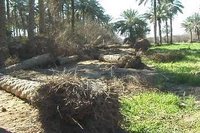

I read an interesting column in the London-based Middle East (Asharq al-Awsat) Arabic daily (4/22/06). The Saudi author Misha’al al-Sudeiri comments on Islamists who yearn for a return of the old Ottoman Khilafa (Caliphate to most of you). He talks about the culture of the khisyan, the castrati, the eunuchs of the court. The author notes that there were African slaves and European slaves in those days that lasted from the 16th century to the turn of the 20th century. The African slaves were castrated at gathering points somewhere near Aswan on the Upper Nile. He claims that the actual castrations were done by Christian Copts, and do you know why? Because the Islamic Shaikhs of the time had issued a fatwa that the Shari’a forbids Moslems from performing these operations, but that it is acceptable if a non-Moslem is ordered and paid to perform the castration. Yet the actual perpetrators, those giving the orders were Moslems.
I found it a revealing glimpse into the workings of a fundamentalist mind, its almost lawyer-like obsession with technicalities (as well as the procreative process and its tools). And I don’t mean just an Islamic fundamentalist. Probably many Christian clerics used a similar ‘logic’ when they sanctioned slavery or supported segregated churches and schools along racial lines. One thing I must add: Christian clerics were not so obsessed with what the author calls the ‘extremely sensitive areas’- well, at least not openly.
Apparently the culture of qat (khat) is spreading from Yemen into parts of Saudi Arabia, according to Al-Arabiya TV. The leafy plant was categorized as a narcotic by the World Health Organization in 1973 but is common in Yemen where everything closes during the qat hour ( the local Happy Hour without the brew). Some say that the qat is as sacred to a Yemeni as the Beaujolais is to a Frenchman or a Frenchwoman- or, to carry the comparison one absurd step further, perhaps as a glass of cold milk is to a farmer in the Midwest at lunch. It is banned in most Arab countries as a narcotic. It is reported that many now use the fresh
leaves as an aphrodisiac, to enhance productivity.
The report claims that the open sale and use of the qat is spreading on Edgware Road, a sort of Arab Telegraph Avenue in London, near the venerable Marble Arch. British authorities are looking into banning the plant.
Things seem to be quieting down along the Iranian nuclear issue front. Seems like both sides are pausing, breathing into paper bags. Perhaps this is the much over-used ‘quiet that precedes the storm’.
In Iraq, there is a new Prime Minister, a close aide to the outgoing PM, also a leader of the same Da’awa Party. Not sure what all the fuss and all the bargaining was about- it is sort of like replacing W with Dick Cheney. Perhaps all the delay was political posturing. But it ain’t over yet, there are cabinet posts to dole out, the military and security services to bargain over- who gets to lock up people, and who gets to complain about it.
Still, it looks like a vibrant (i.e. non-Arab-style) political system they are developing. Now if they can only get rid of these terrorists who blow up civilians.
Cheers
Mohammed

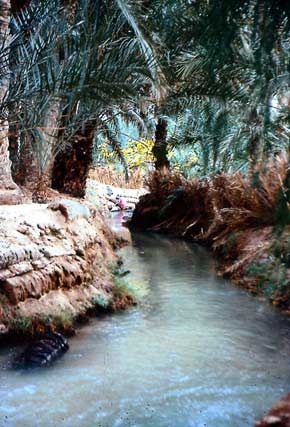
I read an interesting column in the London-based Middle East (Asharq al-Awsat) Arabic daily (4/22/06). The Saudi author Misha’al al-Sudeiri comments on Islamists who yearn for a return of the old Ottoman Khilafa (Caliphate to most of you). He talks about the culture of the khisyan, the castrati, the eunuchs of the court. The author notes that there were African slaves and European slaves in those days that lasted from the 16th century to the turn of the 20th century. The African slaves were castrated at gathering points somewhere near Aswan on the Upper Nile. He claims that the actual castrations were done by Christian Copts, and do you know why? Because the Islamic Shaikhs of the time had issued a fatwa that the Shari’a forbids Moslems from performing these operations, but that it is acceptable if a non-Moslem is ordered and paid to perform the castration. Yet the actual perpetrators, those giving the orders were Moslems.
I found it a revealing glimpse into the workings of a fundamentalist mind, its almost lawyer-like obsession with technicalities (as well as the procreative process and its tools). And I don’t mean just an Islamic fundamentalist. Probably many Christian clerics used a similar ‘logic’ when they sanctioned slavery or supported segregated churches and schools along racial lines. One thing I must add: Christian clerics were not so obsessed with what the author calls the ‘extremely sensitive areas’- well, at least not openly.

Apparently the culture of qat (khat) is spreading from Yemen into parts of Saudi Arabia, according to Al-Arabiya TV. The leafy plant was categorized as a narcotic by the World Health Organization in 1973 but is common in Yemen where everything closes during the qat hour ( the local Happy Hour without the brew). Some say that the qat is as sacred to a Yemeni as the Beaujolais is to a Frenchman or a Frenchwoman- or, to carry the comparison one absurd step further, perhaps as a glass of cold milk is to a farmer in the Midwest at lunch. It is banned in most Arab countries as a narcotic. It is reported that many now use the fresh
leaves as an aphrodisiac, to enhance productivity.
The report claims that the open sale and use of the qat is spreading on Edgware Road, a sort of Arab Telegraph Avenue in London, near the venerable Marble Arch. British authorities are looking into banning the plant.
Things seem to be quieting down along the Iranian nuclear issue front. Seems like both sides are pausing, breathing into paper bags. Perhaps this is the much over-used ‘quiet that precedes the storm’.
In Iraq, there is a new Prime Minister, a close aide to the outgoing PM, also a leader of the same Da’awa Party. Not sure what all the fuss and all the bargaining was about- it is sort of like replacing W with Dick Cheney. Perhaps all the delay was political posturing. But it ain’t over yet, there are cabinet posts to dole out, the military and security services to bargain over- who gets to lock up people, and who gets to complain about it.
Still, it looks like a vibrant (i.e. non-Arab-style) political system they are developing. Now if they can only get rid of these terrorists who blow up civilians.
Cheers
Mohammed
Friday, April 21, 2006
Iraqi Politics, Kuwait Salafis, Rumors of US-Iran Deal, and Algerian Ailments


Middle East News Analysis
Iraq’s political deadlock was finally ‘broken’ with the nomination of Jawad al-Malki, an ally of Dr. al-Ja’afari, to replace him as prime minister. The next step will be the jockeying for important cabinet posts, especially the Ministry of Defense which seems the only one that is open. It looks like the presidency will remain from now on with the Kurds- that might be one way of keeping the Kurds within Iraq and putting off a struggle over Kirkuk. Iraq’s Parliament meets tomorrow to decide on the PM position.

Rumors abound of a US-Iranian deal. A Salafi (as in Taliban-esque and Qaida-esque) writer in the Kuwaiti daily al-Watan (4/21/06) hinted that there might be a deal whereby Iran gets to keep her nuclear program without retaliation and will be awarded a free hand in a chunk of Iraq, perhaps the south. In return, the US gets to have permanent and uncontested control over the rest of the Persian Gulf region. Presumably, the implication here is that, in line with the new Husni Mubarak Doctrine, the Shi’as of the Gulf Arab states will promise to be good boys and not object. It is not clear yet who will guarantee the good behavior of the Salafi/Qaida neo-hippie squads. In the Arab world, one rumor is as good as another, and our region is the birthplace of many conspiracy theories as well as a few religions.
I think the term paranoia could play well to the infidel tunes of Hallelujah in this case. But alas, I doubt that there are many takers.
In Kuwait, there are apparent plans to train police women. That is because the Salafi Fundamentalists want their women to remain behind the burqa, where their faces cannot be seen by other men. Police and passport control agents have been too intimidated to ask these women to show their faces- tribal men would not allow it. Nobody knows who is driving a car, or who is entering the country behind a burqa!! It could be Paris Hilton or Britney or even Jacko or al-Zarqawi in disguise. Hence the idea of police women who can be allowed to see the visages behind the burqa without having to worry about them being overtaken by passion and lust. It is an idea the Fundies hate, but it is probably something they cannot stop.
There are reports in some Middle East media of a continuing rivalry between President AhmadiNejad and Mr Rafsanjani whom he defeated for President. The reports claim that elements of the Iranian leadership tried to steal some of the nuclear thunder away form Mr. Nejad by having Rafsanjani make announcements to the press about their Nuclear (no, not Nukular) Program.
Jordan has used news reports of a Hamas attempt to smuggle arms into Jordan as an excuse to cancel a visit by a Palestinian ministerial delegation. Hamas leaders protest that the whole thing was cooked up by Jordanian Intelligence in order to avoid the embarrassment of having to receive a Hamas minister. Now Jordanian reports also claim that Syria is somehow implicated. Interesting, I thought there was a direct land route from the West Bank to Jordan, a.k.a the former Palestinian Sharq al-Urdun, that is TransJordan to most of you.
This week in Algeria, President AbdelAziz Bouteflika (Father of Teflika, whoever she might be) delivered a blistering attack on the legacy of French colonialism in his country which ended in 1962 (the colonlialism ended, not the country). He did not mention the terrible legacy of the National Liberation Front, the FLN, his own party, over 40 years of independence. The FLN, one of whose leaders was Mr. Bouteflika, took a prosperous French colony and turned it into a basket case plagued by dictatorship and violent Islamic insurrections. Any able bodied man, or young woman, who could, has immigrated to Europe, especially to France, often illegally, in order to be able to feed their families and to be free.
PS: Today the news said that Mr. Bouteflika is swallowing his pride and heading to France for medical exams and treatment. (I wish him well, but how many Algerians get to fly legally to France for treatment.)?
Cheers
Mohammed
Wednesday, April 19, 2006
ARAB MEDIA, PERSIAN GULF OIL RESERVES, AHMADINEJAD'S NUKES, FAT LEADERS
Middle East News Analysis
This is one of those periods when the freer Arab press gets into a mood of deep depression. Clearly the underlying factors for pessimism are permanent in the Arab world, for they represent a valid undercurrent and a constant theme. After all, not much has changed over the past generation, in most cases the same rulers and potentates hold sway. But occasionally it takes certain regional developments to push these emotions into breaking out into the open in a more vociferous form.
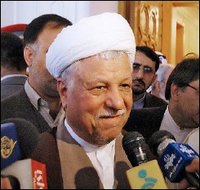
Reactions of the Arab media to recent regional events like Iran’s nuclear program and the terrorist campaign in Iraq have been mixed, as expected. Generally, the major Arab media that are based in Europe, especially London, not being restricted by official censorship, have tended to express more freely the dominant Arab opinion (Al-Hayat and al-Quds al-Arabi). Recently, many of their columnists have tended to mock Arab leaders and belittle them in comparison to the Iranian President, AhmadiNejad. One columnist (al-Quds al-Arabi, 4/19/06) was quite graphic “I wish and hope that we could have an Arab leader who is as cheerful, as firm, as serious, as mocking, as modest, and as defiant as AhmadiNejad. I wish that one of our leaders, one of those who swagger around with their fat bodies, one of those fat ones whose arms are thicker than AhmadiNejad’s whole body, whose bank account is fatter……etc.” You get the gist of it- it is dripping with contempt for Arab leaders and admiration for AhmadiNejad.
Lately there have been a lot of these. Well, perhaps I need to take another look at the amiable little guy.
A columnist in al-Hayat (4/19/06) even lamented that the fate of the Arab region is being determined by two “Great Powers: the United States and Iran". It went on to say that “many Arabs are unhappy about Iran’s role in Iraq, but many Arab citizens do not look at Iran in the same way as their rulers.” It went on to complain that “the Arab regimes look like subservient satellites of the USA and therefore of Israel, and they cannot control their own destinies.”
Most newspapers that are based in the Arab world have been quietly critical of Iran’s ambitions, while their columnists have almost universally wished that it had been an Arab country rather than Iran on the verge of a nuclear break-through.
The Jordanian press in general seems to stick closely to the official government line on this and other issues, even more so than some government-controlled Egyptian newspapers which tend to be still more interesting because they express more diverse opinion. Al-Rai and al-Dustour, the main daily papers in Jordan, read almost like an official government mouthpiece. Or perhaps it is the stunning contrast between the famous Egyptian sense of humor and clever way with words and the absence of the same sense in Jordan and many other Arab states.
Gulf newspapers have expressed varied points of view. While the official editorials have been guarded, many have published columnists of different opinions on the issue. In Kuwait, the relatively liberal al-Qabas and the conservative al-Watan (owned by a member of the ruling family) have both weighed in freely about the issue. They, and UAE papers, certainly have been much more vibrant and diverse than the more timid Jordanian or Saudi press which tend to echo the official line on contentious foreign affairs.
In Kuwait, the weekly al-Tale'a (Left/Liberal) reported that al-Shall, a local consulting and research firm, urged the government to investigate reports that figures for that country’s proven oil reserves may have been deliberately falsified and inflated. The report said that there were claims (originally published three months ago in The Petroleum Intelligence Weekly, a trade publication) that the country’s actual reserves are only 50 billion barrels of crude rather than the previously claimed 100 billion. It questions discrepancies in the old 1983 reserve figures, the levels of production during the past 23 years, and the claimed level of current reserves. The report goes on to say that either the officials consider the figure a state secret or, it hints, perhaps they do now know the actual figure. One thing is certain: you won’t find this kind of open discussion of a discrepancy in oil reserves in the press of any other Arab country. In some countries, the writer of such a report could end up in the local equivalent of Abu Ghreib (the Saddam-era Abu Ghreib, the really, really, really bad one- not the more recent, simply bad, one).
Most Arab markets started the week weak - sorry, I could not avoid that one. There have been demands, especially in the oil states, for more direct government intervention, and demands for the punishment of market officials- the usual proverbial kabsh fidaa syndrome, that is scapegoat to most of you. It will be hard to reform the markets and prevent similar financial crises in the future as long as high oil prices allow governments to intervene and subsidise market losses. So, economic and political reforms might be shelved again, until (if and when) oil prices decline.
High oil prices keep these societies and their govermnments hooked on the same bad old economic and financial policies, just as low oil prices keep Americans hooked on the same bad old consumption patterns. It looks like what is good in the long run for one side, is also harmful in the long run for the other.
Cheers
Mohammed


This is one of those periods when the freer Arab press gets into a mood of deep depression. Clearly the underlying factors for pessimism are permanent in the Arab world, for they represent a valid undercurrent and a constant theme. After all, not much has changed over the past generation, in most cases the same rulers and potentates hold sway. But occasionally it takes certain regional developments to push these emotions into breaking out into the open in a more vociferous form.
Reactions of the Arab media to recent regional events like Iran’s nuclear program and the terrorist campaign in Iraq have been mixed, as expected. Generally, the major Arab media that are based in Europe, especially London, not being restricted by official censorship, have tended to express more freely the dominant Arab opinion (Al-Hayat and al-Quds al-Arabi). Recently, many of their columnists have tended to mock Arab leaders and belittle them in comparison to the Iranian President, AhmadiNejad. One columnist (al-Quds al-Arabi, 4/19/06) was quite graphic “I wish and hope that we could have an Arab leader who is as cheerful, as firm, as serious, as mocking, as modest, and as defiant as AhmadiNejad. I wish that one of our leaders, one of those who swagger around with their fat bodies, one of those fat ones whose arms are thicker than AhmadiNejad’s whole body, whose bank account is fatter……etc.” You get the gist of it- it is dripping with contempt for Arab leaders and admiration for AhmadiNejad.
Lately there have been a lot of these. Well, perhaps I need to take another look at the amiable little guy.
A columnist in al-Hayat (4/19/06) even lamented that the fate of the Arab region is being determined by two “Great Powers: the United States and Iran". It went on to say that “many Arabs are unhappy about Iran’s role in Iraq, but many Arab citizens do not look at Iran in the same way as their rulers.” It went on to complain that “the Arab regimes look like subservient satellites of the USA and therefore of Israel, and they cannot control their own destinies.”
Most newspapers that are based in the Arab world have been quietly critical of Iran’s ambitions, while their columnists have almost universally wished that it had been an Arab country rather than Iran on the verge of a nuclear break-through.
The Jordanian press in general seems to stick closely to the official government line on this and other issues, even more so than some government-controlled Egyptian newspapers which tend to be still more interesting because they express more diverse opinion. Al-Rai and al-Dustour, the main daily papers in Jordan, read almost like an official government mouthpiece. Or perhaps it is the stunning contrast between the famous Egyptian sense of humor and clever way with words and the absence of the same sense in Jordan and many other Arab states.

Gulf newspapers have expressed varied points of view. While the official editorials have been guarded, many have published columnists of different opinions on the issue. In Kuwait, the relatively liberal al-Qabas and the conservative al-Watan (owned by a member of the ruling family) have both weighed in freely about the issue. They, and UAE papers, certainly have been much more vibrant and diverse than the more timid Jordanian or Saudi press which tend to echo the official line on contentious foreign affairs.
In Kuwait, the weekly al-Tale'a (Left/Liberal) reported that al-Shall, a local consulting and research firm, urged the government to investigate reports that figures for that country’s proven oil reserves may have been deliberately falsified and inflated. The report said that there were claims (originally published three months ago in The Petroleum Intelligence Weekly, a trade publication) that the country’s actual reserves are only 50 billion barrels of crude rather than the previously claimed 100 billion. It questions discrepancies in the old 1983 reserve figures, the levels of production during the past 23 years, and the claimed level of current reserves. The report goes on to say that either the officials consider the figure a state secret or, it hints, perhaps they do now know the actual figure. One thing is certain: you won’t find this kind of open discussion of a discrepancy in oil reserves in the press of any other Arab country. In some countries, the writer of such a report could end up in the local equivalent of Abu Ghreib (the Saddam-era Abu Ghreib, the really, really, really bad one- not the more recent, simply bad, one).
Most Arab markets started the week weak - sorry, I could not avoid that one. There have been demands, especially in the oil states, for more direct government intervention, and demands for the punishment of market officials- the usual proverbial kabsh fidaa syndrome, that is scapegoat to most of you. It will be hard to reform the markets and prevent similar financial crises in the future as long as high oil prices allow governments to intervene and subsidise market losses. So, economic and political reforms might be shelved again, until (if and when) oil prices decline.
High oil prices keep these societies and their govermnments hooked on the same bad old economic and financial policies, just as low oil prices keep Americans hooked on the same bad old consumption patterns. It looks like what is good in the long run for one side, is also harmful in the long run for the other.
Cheers
Mohammed
Monday, April 17, 2006
Persian Gulf Stock Markets, Iranian Nukes, Copts, Iraq (again) and Advice to Rumsfeld
Middle East News Analysis


Iran is now following a two-pronged diplomacy. While escalating its rhetoric toward the West, Iran has been quietly reassuring nervous Gulf rulers about its nuclear program. Ali Akbar Rafsanjani, former president and still a high regime official visited Kuwait to deliver such a message. He was given much publicity in the local media, publicity of the type that in the past was reserved for Iraqi leaders.
Persian Gulf stock markets have been hurt by the jitters from a potential confrontation between Iran and the United States. Many local newspapers publicized reports that Iran has prepared a list of potential targets to hit in case of a conflict- a sort of replay of its actions of the 1980s when the region tilted toward Iraq, but on a much larger scale. The major markets in Kuwait, Saudi Arabia, and the UAE declined sharply over several days. But never fear- the rulers, under pressure from tribal elders, seem set to do something about that. It looks like they will intensify already existing programs for state purchases of company shares- some have warned that they might resort to using social security funds for that purpose. This practice is almost predictable and recurs like good Swiss clockwork every few years, which also makes it a kind of entitlement: it reduces the risks of local investment but keeps the financial markets and its institutions heavily dependent on state subsidies, and reduces their competitiveness. (Alan Greenspan and Ben Bernanke, eat your hearts out).
London-based al-Quds al-Arabi (a.k.a Arab Jerusalem), one of a few remaining pan-Arabist papers and a strong opponent of the American intervention in Iraq, has been subtly shifting its position about Iraq. Now columnists of the once pro-Saddam paper are hinting that Ibrahim al-Ja'afari might not be a bad choice for P.M after all. The main reason for this shift, they claim, is that he firmly believes in keeping Kirkuk out of Kurdish hands. That is the same reason that the Kurds are opposing him for. The columnist for the paper said that giving oil-rich Kirkuk to the Kurds is tantamount to giving it to the Israelis. He hints darkly at Kurdish involvement in some vague Zionist plots. Perhaps he is referring to the times of the Anfal operations when when Saddam was uprooting, massacring and gassing the Kurds, and the Arab media and Arab governments were cheering him on.
I believe that the northern front, the fluid line separating Kurdistan from central Iraq where the terrorists are centered, will be the next major battlefront. The action will pick up sharply in the area around Kirkuk, perhaps soon after a new government is in place (Mr. Rumsfeld, I hope you are reading this : once the new government is in place...send 'em to Kirkuk).
The same newspaper also notes the spread of sectarian violence across the Arab world, and notes the latest violence in Alexandria, Egypt where a Coptic church was targeted and one man killed.
My view is that it is all part of the Fundamentalist-Salafi mindset of demonizing other sects and religions. I suspect from my observations in my previous incarnation in the Middle East that this religious issue is used by some as a fig-leaf to cover ethnic preferences and prejudices. They want to remake the historically-tolerant Egyptian society into the image of the grim intolerant tribal societies of the Arab Persian Gulf states.
Of course Alexandria was built by ancient Greeks (ok, ok, and Macedonians) and saw its golden age in modern times during the first half of the 20th century when it had a vibrant population mix of Egyptians, Greeks, Italians, and Jews, among others.
The paper also laments a vacuum of ‘leadership’ in Egypt. I could almost hear them singing: “Where have you gone, Gamal Abdel-Nasser....” to the tune of 'Mrs. Robinson'.
Speaking of Iraq, many who cheered the free lections last year are now trying hard to alter its political outome. There is talk of suspending some articles of the constitution in order to allow a non-elected body to have some power over the formation of the government. Mr. Adnan Pachachi, a famous moderate Sunni politician has been promoting the idea lately.
A new name being mentioned now is Mr Ali al-Adeeb of al-Ja'afari's Da'awa Party.
The Saudi-owned, London-based al-Hayat newspaper returns to an old issue, again talking about the Israeli tail wagging the American dog (4/17/06). It talks mainly about a study by two professors at Harvard University about the power of the Israeli lobby. They promise more on this in tomorrow’s issue.
Cheers
Mohammed
Thursday, April 13, 2006
Middle East News Briefs
Qadhafi (or is it Gaddafi?), Jews Doing the Haj, The Pope Doing Mecca, And Egyptian Foot-In-The-Mouth
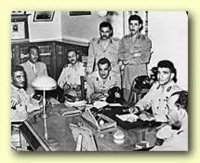
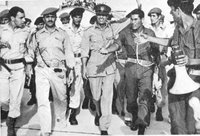
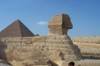
Just to show that not everything about the Middle East is grim these days:
Yesterday Colonel Qadhafi of Libya invited Jews and Christians to make the pilgrimage to Mecca. He emphasized that Jews and Christians have the right to do the Haj. Brother Mu'ammar should tell that to the custodians of the shrines, but I doubt that they would issue the required visas. I also doubt that there will be many takers- well, maybe the Pope is curious about exotic places. Just imagine, a bunch of nattily-dressed Hasidim circumambulating the Ka'aba for the first time in perhaps fifteen centuries. (Did they have Hasidim in those old days?) Oy Vey.
As usual, there is a method to the Colonel's seeming madness. He told a bunch of (nervous?) African leaders in Timbuktu (Mali) that Mecca should be a "meeting place for all followers of the three heavenly faiths, including Christians and Jews". The Libyan leader noted that the Saudi rulers call W (Bush, that is) a friend, yet they would not allow him to visit Mecca, because they not-so-secretly consider him an impure heathen. So, now we know why W and Abdullah look so tense, even while holding hands in Crawford.
There is often a misunderstood logic to these outbursts by the Colonel. But this time he ruined the whole thing by asserting that within a few decades Europe will become Moslem. I though Old Europe was becoming more atheist (BTW: is this a half-victory for the Communists?)
In Cairo, the Secretary General of the Arab League met with the leader of an opposition (Sunni) Iraqi pary. I wonder how many Iraqi opposition leaders he met with when Saddam was ruling the roost?
Iraq coycotted an Arab Foreign Ministers meeting in Cairo in protest over Egyptian President Mubarak's comments about sectarian (Shi'a) issues (see my last report). The Egyptian state-controlled press tried to diffuse the issue by saying that he meant only the Shi'as in Iraq, not in the other Gulf states!!!
How many feet do these people have?- Don't you usually need to take one of them out before you can put another back in?
Cheers
Mohammed
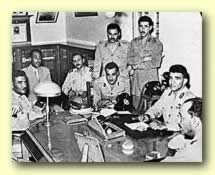


Just to show that not everything about the Middle East is grim these days:
Yesterday Colonel Qadhafi of Libya invited Jews and Christians to make the pilgrimage to Mecca. He emphasized that Jews and Christians have the right to do the Haj. Brother Mu'ammar should tell that to the custodians of the shrines, but I doubt that they would issue the required visas. I also doubt that there will be many takers- well, maybe the Pope is curious about exotic places. Just imagine, a bunch of nattily-dressed Hasidim circumambulating the Ka'aba for the first time in perhaps fifteen centuries. (Did they have Hasidim in those old days?) Oy Vey.
As usual, there is a method to the Colonel's seeming madness. He told a bunch of (nervous?) African leaders in Timbuktu (Mali) that Mecca should be a "meeting place for all followers of the three heavenly faiths, including Christians and Jews". The Libyan leader noted that the Saudi rulers call W (Bush, that is) a friend, yet they would not allow him to visit Mecca, because they not-so-secretly consider him an impure heathen. So, now we know why W and Abdullah look so tense, even while holding hands in Crawford.
There is often a misunderstood logic to these outbursts by the Colonel. But this time he ruined the whole thing by asserting that within a few decades Europe will become Moslem. I though Old Europe was becoming more atheist (BTW: is this a half-victory for the Communists?)
In Cairo, the Secretary General of the Arab League met with the leader of an opposition (Sunni) Iraqi pary. I wonder how many Iraqi opposition leaders he met with when Saddam was ruling the roost?
Iraq coycotted an Arab Foreign Ministers meeting in Cairo in protest over Egyptian President Mubarak's comments about sectarian (Shi'a) issues (see my last report). The Egyptian state-controlled press tried to diffuse the issue by saying that he meant only the Shi'as in Iraq, not in the other Gulf states!!!
How many feet do these people have?- Don't you usually need to take one of them out before you can put another back in?
Cheers
Mohammed
Monday, April 10, 2006
Middle East News Brief
Saudi Women Driving, Men Voting, And Cold Feet in the Desert
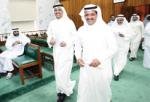
The New York Times reports that Arab rulers seem to be backpedaling again on the issues of Democracy and human rights. In Egypt, local elections have been postponed so that a way can be devised to dilute the power of the Moslem Brotherhood. In Bahrain, elections have been put off in order to devise ways to dilute the Shi'a vote (about 70%). Bahrain's ruler had already established a new legislative system where half the members are appointed by the ruler.
Most likely political noises in the United States about withdrawal from Eye-raq have made them feel complacent again about the need for voting rights, democracy, power- sharing etc.
(P.N. : A leading Arab bureaucrat once commented to me, in a previous life at another time, about noisy demands in some Asian country for democracy "Their bellies must be full, otherwise they would not have the time or the energy for this nonsense!")
In Saudi Arabia, it seems that the whole question of human rights and openness now evolves around the issue of women being able to drive, cars that is. Before some women in the US get overly excited....this is to drive a car, not to choose or vote. I expect that at some point the top clergy will do the bidding of the royals and proclaim that it is OK for women to drive. Which is a step on a longgggg road. Then Saudi men will be happy because they would not have to pay and house an Asian foreign driver who claims to be Moslem when everybody knows otherwise. And they would be so ecstatic about the savings that they would forget about minor issues like justice, financial accountability, and the right of everybody to vote.
The repersussions of President Mubarak's comments about the loyalties of the Shi'as have spread, especially in Iraq, the Persian Gulf states, and Lebanon. The Prime Minister of Kuwait Shaikh N. Mohammed A. Al-Sabah claimed that Mubarak's statement did not refer to Kuwait and its 30%+ Shi'as at all. Come again?? Êtes-vous sûre, M. le Premier Ministre? (Perhaps Mubarak was referring to every other country but Kuwait?)
Iran's President AhamadiNejad announced that his country has enriched low grade uranium and thus is eligible for the 'Nuclear Club'. That is very re-assuring by the president who might believe that 'The End Is Near'. Just the kind of development the Middle East needed right now. Oy vey.
The stalemate in Iraq continues....
Cheers
Mohammed
The New York Times reports that Arab rulers seem to be backpedaling again on the issues of Democracy and human rights. In Egypt, local elections have been postponed so that a way can be devised to dilute the power of the Moslem Brotherhood. In Bahrain, elections have been put off in order to devise ways to dilute the Shi'a vote (about 70%). Bahrain's ruler had already established a new legislative system where half the members are appointed by the ruler.
Most likely political noises in the United States about withdrawal from Eye-raq have made them feel complacent again about the need for voting rights, democracy, power- sharing etc.
(P.N. : A leading Arab bureaucrat once commented to me, in a previous life at another time, about noisy demands in some Asian country for democracy "Their bellies must be full, otherwise they would not have the time or the energy for this nonsense!")
In Saudi Arabia, it seems that the whole question of human rights and openness now evolves around the issue of women being able to drive, cars that is. Before some women in the US get overly excited....this is to drive a car, not to choose or vote. I expect that at some point the top clergy will do the bidding of the royals and proclaim that it is OK for women to drive. Which is a step on a longgggg road. Then Saudi men will be happy because they would not have to pay and house an Asian foreign driver who claims to be Moslem when everybody knows otherwise. And they would be so ecstatic about the savings that they would forget about minor issues like justice, financial accountability, and the right of everybody to vote.
The repersussions of President Mubarak's comments about the loyalties of the Shi'as have spread, especially in Iraq, the Persian Gulf states, and Lebanon. The Prime Minister of Kuwait Shaikh N. Mohammed A. Al-Sabah claimed that Mubarak's statement did not refer to Kuwait and its 30%+ Shi'as at all. Come again?? Êtes-vous sûre, M. le Premier Ministre? (Perhaps Mubarak was referring to every other country but Kuwait?)
Iran's President AhamadiNejad announced that his country has enriched low grade uranium and thus is eligible for the 'Nuclear Club'. That is very re-assuring by the president who might believe that 'The End Is Near'. Just the kind of development the Middle East needed right now. Oy vey.
The stalemate in Iraq continues....
Cheers
Mohammed
Sunday, April 09, 2006
Middle East News of Interest
Mubarak of Egypt comments on Iraq
Eternal President Mubarak of Egypt yesterday had some interesting comments in an interview with the Saudi-owned Al-Arabiya satellite TV. The 78 years old Mubarak, president of Egypt for the past 25 years (W..eat your heart out), claimed that all Shi'as, wherever they are, are more loyal to Iran than to their own countries. Which means he has accused 65% of the Iraqi people of being a fifth column. Not to mention the the Shi'as who form majorities and large minorities of other countries.
My guess is that he has just wiped out any chance for Egypt, the major Arab country, to play a positive role in stabilizing Iraq. Talk about a president-for-life interfering in the internal affairs of another country.....actually several other countries.
I wonder how long it will take to finish grooming his son and almost certain successor?
Cheers
Mohammed
Eternal President Mubarak of Egypt yesterday had some interesting comments in an interview with the Saudi-owned Al-Arabiya satellite TV. The 78 years old Mubarak, president of Egypt for the past 25 years (W..eat your heart out), claimed that all Shi'as, wherever they are, are more loyal to Iran than to their own countries. Which means he has accused 65% of the Iraqi people of being a fifth column. Not to mention the the Shi'as who form majorities and large minorities of other countries.
My guess is that he has just wiped out any chance for Egypt, the major Arab country, to play a positive role in stabilizing Iraq. Talk about a president-for-life interfering in the internal affairs of another country.....actually several other countries.
I wonder how long it will take to finish grooming his son and almost certain successor?
Cheers
Mohammed
Saturday, April 08, 2006
Middle East Opinion #12
The More Serious Islamic Fundamentalist Threat in the Middle East
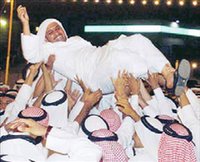
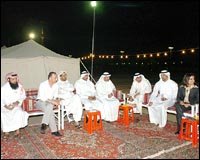
(The Photo above is probably an Arab-style mush pit, or it could be some peculiar version of a stag party. It looks like both.)
Lost in all the publicity about Islamic militancy, political activism and terrorism is a quiet revolution- a takeover by stealth- that has been taking place across the Arab Middle East over the past two decades. Most westerners who are not specialists on the Arab World or long-term residents do not see it.
It is not a revolution with a view to the future, but one firmly committed to a questionable past. Its aim has been to gradually bend society to its will, re-orient it, and shift the acceptable mores toward those of the Salafi right (I am using ‘right’ here for lack of a better word, not in a historical context). The ultimate goal is the creation of its own intolerant version of an Islamic past that was actually noted for tolerance through most of its history. Ancient Moslem/Arab rulers from Andalusia to Baghdad were probably the most enlightened of their era. They did not shy away from relying on the best and the brightest minds and talents of their time, and often those were non-Arabs and non-Moslems. Churches and synagogues coexisted alongside mosques in the large cities along the Eastern Mediterranean Coast and in Spain for centuries, long before Tomas de Torquemada and his inquisitors clamped their own Taliban-style of intolerance on Spain- long before they started burning and massacring Jews in Continental Europe as a sort of perverse mass therapy. Long before they started burning women as witches in Europe.
This revolution by stealth has been undertaken with the connivance of many Arab rulers. About a quarter of a century ago, Arab dictators, potentates and monarchs discovered a latent force at their disposal, and an easy way to get rid of their annoying secular opponents and critics, especially those who called for financial accountability. In those days, the fundamentalists were on the margins of society, politically ostracized as reactionaries in most countries with the exception of Saudi Arabia.
Yet a two-way Faustian (or Shaitani) deal that evolved over the years, tacit in most cases, has allowed the Salafi fundamentalists a free rein to shift and redefine the acceptable moral standards of many Arab societies. The term ‘moral’, according to this deal, is confined almost exclusively to two issues: restricting the freedom of worship, and clamping down on social freedoms, especially the interaction between men and women. Beyond that, as far as the Fundies are concerned, anything goes. All the moral tenets of the Moslem faith regarding the sanctity of public (and private) property, financial accountability, abhorrence of injustice, and equality were thrown to the wind.
Today we have a beast that everyone warns us about, but we are warned about only the public side of the beast, the more sensational side. This side of the Fundamentalist threat is easier to deal with and contain than the more serious hidden side. We are warned about the terrorism, the violence, and the occasional street demonstrations, and most of these occur on the far shores of a nervous Europe and some other places. What about the more serious danger, the real time bomb that is ticking in the heart of the Arab World, the insidious infiltration and take-over of public institutions and of the de-facto morality-and-thought police that has evolved over the recent years? Even if the terrorism is defeated, the seeds of the terrorists' vision have been planted deep within these societies. Certainly this more serious long-term problem is not a result of the partition of Palestine, or the loss of Jerusalem twice in one generation. Nor is it a result of the intrusion of foreign powers into the region. It is a direct lovechild of the coupling of the avarice of the rulers and the selective morality and hypocracy of the Salafi Islamic fundamentalists.
Cheers
Mohammed

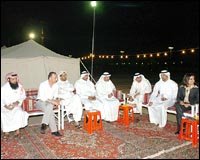
(The Photo above is probably an Arab-style mush pit, or it could be some peculiar version of a stag party. It looks like both.)
Lost in all the publicity about Islamic militancy, political activism and terrorism is a quiet revolution- a takeover by stealth- that has been taking place across the Arab Middle East over the past two decades. Most westerners who are not specialists on the Arab World or long-term residents do not see it.
It is not a revolution with a view to the future, but one firmly committed to a questionable past. Its aim has been to gradually bend society to its will, re-orient it, and shift the acceptable mores toward those of the Salafi right (I am using ‘right’ here for lack of a better word, not in a historical context). The ultimate goal is the creation of its own intolerant version of an Islamic past that was actually noted for tolerance through most of its history. Ancient Moslem/Arab rulers from Andalusia to Baghdad were probably the most enlightened of their era. They did not shy away from relying on the best and the brightest minds and talents of their time, and often those were non-Arabs and non-Moslems. Churches and synagogues coexisted alongside mosques in the large cities along the Eastern Mediterranean Coast and in Spain for centuries, long before Tomas de Torquemada and his inquisitors clamped their own Taliban-style of intolerance on Spain- long before they started burning and massacring Jews in Continental Europe as a sort of perverse mass therapy. Long before they started burning women as witches in Europe.
This revolution by stealth has been undertaken with the connivance of many Arab rulers. About a quarter of a century ago, Arab dictators, potentates and monarchs discovered a latent force at their disposal, and an easy way to get rid of their annoying secular opponents and critics, especially those who called for financial accountability. In those days, the fundamentalists were on the margins of society, politically ostracized as reactionaries in most countries with the exception of Saudi Arabia.
Yet a two-way Faustian (or Shaitani) deal that evolved over the years, tacit in most cases, has allowed the Salafi fundamentalists a free rein to shift and redefine the acceptable moral standards of many Arab societies. The term ‘moral’, according to this deal, is confined almost exclusively to two issues: restricting the freedom of worship, and clamping down on social freedoms, especially the interaction between men and women. Beyond that, as far as the Fundies are concerned, anything goes. All the moral tenets of the Moslem faith regarding the sanctity of public (and private) property, financial accountability, abhorrence of injustice, and equality were thrown to the wind.
Today we have a beast that everyone warns us about, but we are warned about only the public side of the beast, the more sensational side. This side of the Fundamentalist threat is easier to deal with and contain than the more serious hidden side. We are warned about the terrorism, the violence, and the occasional street demonstrations, and most of these occur on the far shores of a nervous Europe and some other places. What about the more serious danger, the real time bomb that is ticking in the heart of the Arab World, the insidious infiltration and take-over of public institutions and of the de-facto morality-and-thought police that has evolved over the recent years? Even if the terrorism is defeated, the seeds of the terrorists' vision have been planted deep within these societies. Certainly this more serious long-term problem is not a result of the partition of Palestine, or the loss of Jerusalem twice in one generation. Nor is it a result of the intrusion of foreign powers into the region. It is a direct lovechild of the coupling of the avarice of the rulers and the selective morality and hypocracy of the Salafi Islamic fundamentalists.
Cheers
Mohammed
Friday, April 07, 2006
Middle East Opinion #11
Baghdad Bombing, Salafis in Drag, and Hookers Ball
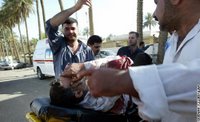
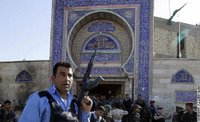
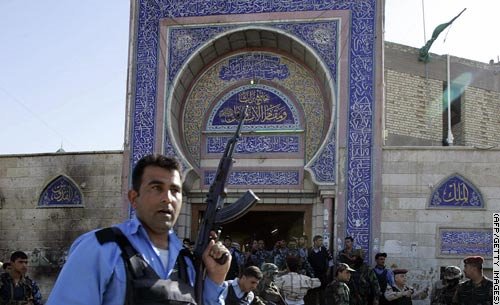
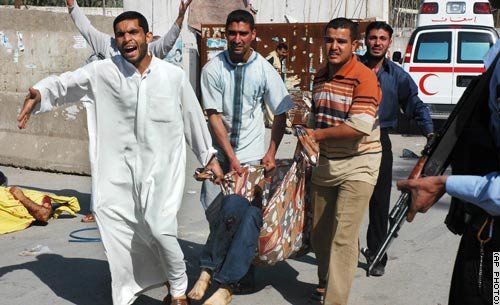
Al-Jazeira TV News reported: “At least 69 Iraqis died and tens others were wounded in an explosion carried out by two suicide bombers dressed as women. At the same time, the American ambassador warned that delays in forming a government could lead the country to a civil war.” (Interesting, insertion of the last statement, yet another warning statement, by the ambassador.)
Speaking of civil war, that was one day after another bombing at another Shi’a mosque in Najaf killed and wounded another group of....you guessed it, Shi’as. Which was one day after another bombing of another Shi'a.....etc, etc.
Will the bombings really stop after a reasonable government is formed? History makes me doubt that, it doesn't usually work. (I won't mention that old overused example...the cliche about a city in Bavaria more than sixty years ago...something about British and German politicians meeting...etc. You know the city I am referring to, it even has a good soccer team).
At least Al-Jazeira did not say that the bombers were martyred, as some other Arab media outlets used to do before the bombings in Jordan. Perhaps that was because these guys were in drag, they were dressed as women, and women in the Middle East are not supposed to gain the glory of martyrdom, not even pretend let’s-play-house women. They are supposed to feed the would-be martyrs, fatten them up like pi….oops sheep (a near-typo there), wash them, dress them, and entertain them- not necessarily in that order.
Interesting, though. Hard to imagine the old Salaf, the Pious Predecessors of these modern day Wahhabi Salafis, dressing up in d-rag for an operation- they must have looked like a pair of old oasis queens on their way to the Hookers Ball. Must have been hard for them, giving up the traditional trademark of Salafi chic, the Burqa, for a mere abaya and headscarf.
Cheers (I think)
Mohammed

Al-Jazeira TV News reported: “At least 69 Iraqis died and tens others were wounded in an explosion carried out by two suicide bombers dressed as women. At the same time, the American ambassador warned that delays in forming a government could lead the country to a civil war.” (Interesting, insertion of the last statement, yet another warning statement, by the ambassador.)
Speaking of civil war, that was one day after another bombing at another Shi’a mosque in Najaf killed and wounded another group of....you guessed it, Shi’as. Which was one day after another bombing of another Shi'a.....etc, etc.
Will the bombings really stop after a reasonable government is formed? History makes me doubt that, it doesn't usually work. (I won't mention that old overused example...the cliche about a city in Bavaria more than sixty years ago...something about British and German politicians meeting...etc. You know the city I am referring to, it even has a good soccer team).
At least Al-Jazeira did not say that the bombers were martyred, as some other Arab media outlets used to do before the bombings in Jordan. Perhaps that was because these guys were in drag, they were dressed as women, and women in the Middle East are not supposed to gain the glory of martyrdom, not even pretend let’s-play-house women. They are supposed to feed the would-be martyrs, fatten them up like pi….oops sheep (a near-typo there), wash them, dress them, and entertain them- not necessarily in that order.
Interesting, though. Hard to imagine the old Salaf, the Pious Predecessors of these modern day Wahhabi Salafis, dressing up in d-rag for an operation- they must have looked like a pair of old oasis queens on their way to the Hookers Ball. Must have been hard for them, giving up the traditional trademark of Salafi chic, the Burqa, for a mere abaya and headscarf.
Cheers (I think)
Mohammed
Tuesday, April 04, 2006
Middle EAst Opinion #10
Sectarianism, Shu’aubism, and Jet-Lagged Congressmen
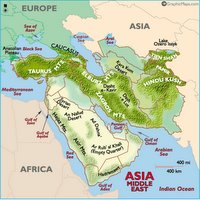
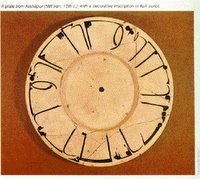
Two terms have reappeared in the Arab Media in recent weeks. Both terms have heavy political and ethnic connotations and are not familiar to westerners.
One is Sectarianism, a thinly veiled reference to the Shi’as, their actions and politics. It has been used extensively over the past years, and implies preference to one’s own sect, something that has been going on among all sects in the Middle East forever. Of course, all states in the region have their sectarian policies. Saudi Arabian and other Persian Gulf government policies are sectarian when they discriminate against the Shi’a or other minorities. They are also sectarian in some countries when they discriminates against the Shi’a plurality (Lebanon in the past) or majority (Bahrain to this day). The mullahs in Iran are following sectarian policies because I doubt that there are Sunnis in high positions of their government, for example. Iraq’s government was silently sectarian before the invasion of 2003. The term sectarian has already entered the American diplomatic and political lexicon. Congressmen who probably once had to look up its meaning now use the term freely even if they have not recently been to Baghdad. That is especially true if they have been to some other Arab capitals.
Shu’aubism is the other old-new term, and it is a less pleasant one. It comes from the Arabic word Sha’ab meaning ‘people’ or nation. It is a derogatory term, a xenophobic term that hints at unreasonable subversive inclinations, such as resentment of discrimination, and it contains strong implications of treachery. An Arab from the East is conditioned to immediately look around him for signs of a conspiracy whenever he hears the term. It is usually, but not always, used against minorities in Arab countries, especially Shi'as. It is conveniently vague, yet everybody in the region knows exactly what it means and who it refers to. It is a fourteen centuries old term that was used against anyone who was not part of the Arab tribal mainstream, in an ethnic or sectarian sense, but who aspired for equality. It is an ancient term but is now heavy with thinly veiled Nazi-type connotations- had Hitler known Arabic he would have used the term to refer to Jews and perhaps the resistence movements in occupied Europe. Just think, we would have had French, Greek, and Slavic Sh'aubis in the heart of Europe!!!
This term has been used in modern times extensively by the Ba’ath, by some pan-Arabist nationalists, and, more recently, by some Salafi Islamic fundamentalists and occasionally by ruling elites in the Persian Gulf when there are murmurs of local discontent. It is mostly, but not exclusively, used in its old historical sense, i.e. in reference to the Shi’as of certain Arab countries. Occasionally it has been used against other minorities, such as the Kurds of Iraq and the Berbers of North Africa.
The term has such negative and derogatory connotations that it has been almost dormant in recent years in most countries. However, in recent days some of the Arab media outlets, especially those based in Europe, have been re-introducing the term, some of them shyly but others not so shyly, mainly in reference to events in Iraq.
I wonder, will this term enter the American political-speak as well? Will we hear this term soon from some jet-lagged congressmen and other leaders?? Of course, pronouncing it correctly should be a challenge- it makes it almost worth the wait.
Cheers
Mohammed

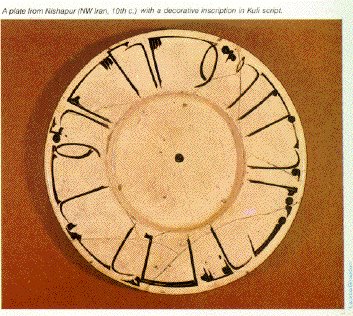
Two terms have reappeared in the Arab Media in recent weeks. Both terms have heavy political and ethnic connotations and are not familiar to westerners.
One is Sectarianism, a thinly veiled reference to the Shi’as, their actions and politics. It has been used extensively over the past years, and implies preference to one’s own sect, something that has been going on among all sects in the Middle East forever. Of course, all states in the region have their sectarian policies. Saudi Arabian and other Persian Gulf government policies are sectarian when they discriminate against the Shi’a or other minorities. They are also sectarian in some countries when they discriminates against the Shi’a plurality (Lebanon in the past) or majority (Bahrain to this day). The mullahs in Iran are following sectarian policies because I doubt that there are Sunnis in high positions of their government, for example. Iraq’s government was silently sectarian before the invasion of 2003. The term sectarian has already entered the American diplomatic and political lexicon. Congressmen who probably once had to look up its meaning now use the term freely even if they have not recently been to Baghdad. That is especially true if they have been to some other Arab capitals.
Shu’aubism is the other old-new term, and it is a less pleasant one. It comes from the Arabic word Sha’ab meaning ‘people’ or nation. It is a derogatory term, a xenophobic term that hints at unreasonable subversive inclinations, such as resentment of discrimination, and it contains strong implications of treachery. An Arab from the East is conditioned to immediately look around him for signs of a conspiracy whenever he hears the term. It is usually, but not always, used against minorities in Arab countries, especially Shi'as. It is conveniently vague, yet everybody in the region knows exactly what it means and who it refers to. It is a fourteen centuries old term that was used against anyone who was not part of the Arab tribal mainstream, in an ethnic or sectarian sense, but who aspired for equality. It is an ancient term but is now heavy with thinly veiled Nazi-type connotations- had Hitler known Arabic he would have used the term to refer to Jews and perhaps the resistence movements in occupied Europe. Just think, we would have had French, Greek, and Slavic Sh'aubis in the heart of Europe!!!
This term has been used in modern times extensively by the Ba’ath, by some pan-Arabist nationalists, and, more recently, by some Salafi Islamic fundamentalists and occasionally by ruling elites in the Persian Gulf when there are murmurs of local discontent. It is mostly, but not exclusively, used in its old historical sense, i.e. in reference to the Shi’as of certain Arab countries. Occasionally it has been used against other minorities, such as the Kurds of Iraq and the Berbers of North Africa.
The term has such negative and derogatory connotations that it has been almost dormant in recent years in most countries. However, in recent days some of the Arab media outlets, especially those based in Europe, have been re-introducing the term, some of them shyly but others not so shyly, mainly in reference to events in Iraq.
I wonder, will this term enter the American political-speak as well? Will we hear this term soon from some jet-lagged congressmen and other leaders?? Of course, pronouncing it correctly should be a challenge- it makes it almost worth the wait.
Cheers
Mohammed
Saturday, April 01, 2006
Middle East Opinion # 9
Jarhead,War, and Oil Fires
I never had a chance to see the film 'Jarhead' at the theatre. I finally rented the DVD and watched it at home. Clearly it was meant to be a powerful film with a message about war. Unfortunately parts of it were made for the teenage, bathroom-joke set. There are several scenes of bucketfuls of human feces, urine, and masturbation. These are supposed to make a powerful film. It is a good thing we dont get to smell films.
It could have been a powerful film, if they had toned down the toilet and jacking-off scenes. And the part about a wife sending her soldier-husband a video of herself having sex with another man...that was something straight out of the imagination of a Hollywood script-writer.
The scenes about the oil fires of Kuwait were quite realistic and powerful, I know because I was there around that time, I spent several months breathing in that smoke, courtesy of Saddam- you cannot exaggerate hell on earth. The film does provide a message about the supposed futility of war... but it only applies in the specific case of the two characters.
Overall I think it could have been a powerful film, but was somehow changed into a silly film made with the junior high (middle) school set in mind. But you never know, it may someday turn into a cult classic .
Cheers
Mohammed
I never had a chance to see the film 'Jarhead' at the theatre. I finally rented the DVD and watched it at home. Clearly it was meant to be a powerful film with a message about war. Unfortunately parts of it were made for the teenage, bathroom-joke set. There are several scenes of bucketfuls of human feces, urine, and masturbation. These are supposed to make a powerful film. It is a good thing we dont get to smell films.
It could have been a powerful film, if they had toned down the toilet and jacking-off scenes. And the part about a wife sending her soldier-husband a video of herself having sex with another man...that was something straight out of the imagination of a Hollywood script-writer.
The scenes about the oil fires of Kuwait were quite realistic and powerful, I know because I was there around that time, I spent several months breathing in that smoke, courtesy of Saddam- you cannot exaggerate hell on earth. The film does provide a message about the supposed futility of war... but it only applies in the specific case of the two characters.
Overall I think it could have been a powerful film, but was somehow changed into a silly film made with the junior high (middle) school set in mind. But you never know, it may someday turn into a cult classic .
Cheers
Mohammed
Friday, March 31, 2006
Middle East Opinion #8
Iraqi Politics...Fast Forward to the Past??
There are reports around that the coalition may have found an 'Arab' solution to one aspect of the situation in Iraq. The reports, and grumblings, are circulating in Baghdad, in some Arab media, and the Internet. This new solution is aimed at assuaging Sunni concerns and meeting some of their political demands. It also might satisfy some of the demands of the rulers of neighboring Arab oil states. This solution allegedly taking shape now would deal with the main concerns of the (Sunni) rulers of Iraq's Arab neighbors, who were always happy with a militarized Iraq where the Sunni elites controlled the officers' corp- so long as its energies and guns were aimed at internal dissent and not toward the southern and western borders.
The reports talk of a new force composed mostly of former members of Saddam's elite security and military forces, what an Iraqi official called a Third Army not responsible to the elected political leadership. Will this new force be along the lines of what is called the National Guard in neighboring Arab states, whereby the goal is to act as a balancing force to the normal military and security services?
Was the battle at the Husainiya in Baghdad last week a trial of this new policy? Will we see more of this in the coming weeks? Will this lead to an explosion and a new insurgency in the Shi'a Central and Southern regions which have been relatively calm so far?
Is the U.S creating a new Iraqi military military, or one along the same lines as the old one, i.e. the military that existed from 1921- 2003? That military was heavily politicized, it was the strongest institution in the country, and it always sought to control the political agenda. It staged coups whenever given the opportunity, and was involved in ethnic massacres (read about the Anfal operations which were completely ignored by the Arab media at the time).
Are we perhaps preparing a shadow junta a la Lon Nol or Thieu and their colleagues to balance the democratically elected body politic of a free Iraq?? Are we repeating the eighty-year old mistakes of the British? The Brits saw the Shi'a majority as the main source of potential trouble, and they thought they would eliminate the political effects of their numerical superiority by bestowing all the advantages on the Ottoman-favored Sunni elites. That policy backfired quickly, as the militarized new ruling elites almost immdeiately sought to get rid of British influence and sided with the Nazis (the April Fools coup of 1941). After a series of coups, the crowning achievemnt of that power structure was the coming to power of the Ba'ath Party (and Saddam) in 1968 and the installation of a regime that was a half-baked third-world tribal version of the Third Reich (of course without the autobahn or the proverbial trains running on time).
The rest is history...Are we about to repeat it? Would that be a good exit strategy? Would it be a good long-term strategy beyond our present election cycle of 2006-2008?
Or are we trying to set up a Turkish-style system whereby the military sets an (opaque) glass ceiling beyond which elected leaders cannot aspire to move?? Do we have our fingers crossed that this new military will not turn around as soon as we disengage and stage the first coup of the new democratic era??
These are all interesting alternatives, and one of them will probably start taking shape in the coming weeks. The next few weeks will tell.
Cheers
Mohammed
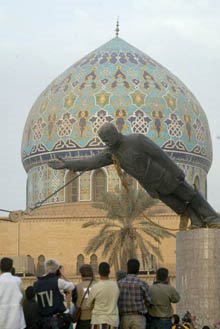
There are reports around that the coalition may have found an 'Arab' solution to one aspect of the situation in Iraq. The reports, and grumblings, are circulating in Baghdad, in some Arab media, and the Internet. This new solution is aimed at assuaging Sunni concerns and meeting some of their political demands. It also might satisfy some of the demands of the rulers of neighboring Arab oil states. This solution allegedly taking shape now would deal with the main concerns of the (Sunni) rulers of Iraq's Arab neighbors, who were always happy with a militarized Iraq where the Sunni elites controlled the officers' corp- so long as its energies and guns were aimed at internal dissent and not toward the southern and western borders.
The reports talk of a new force composed mostly of former members of Saddam's elite security and military forces, what an Iraqi official called a Third Army not responsible to the elected political leadership. Will this new force be along the lines of what is called the National Guard in neighboring Arab states, whereby the goal is to act as a balancing force to the normal military and security services?
Was the battle at the Husainiya in Baghdad last week a trial of this new policy? Will we see more of this in the coming weeks? Will this lead to an explosion and a new insurgency in the Shi'a Central and Southern regions which have been relatively calm so far?
Is the U.S creating a new Iraqi military military, or one along the same lines as the old one, i.e. the military that existed from 1921- 2003? That military was heavily politicized, it was the strongest institution in the country, and it always sought to control the political agenda. It staged coups whenever given the opportunity, and was involved in ethnic massacres (read about the Anfal operations which were completely ignored by the Arab media at the time).
Are we perhaps preparing a shadow junta a la Lon Nol or Thieu and their colleagues to balance the democratically elected body politic of a free Iraq?? Are we repeating the eighty-year old mistakes of the British? The Brits saw the Shi'a majority as the main source of potential trouble, and they thought they would eliminate the political effects of their numerical superiority by bestowing all the advantages on the Ottoman-favored Sunni elites. That policy backfired quickly, as the militarized new ruling elites almost immdeiately sought to get rid of British influence and sided with the Nazis (the April Fools coup of 1941). After a series of coups, the crowning achievemnt of that power structure was the coming to power of the Ba'ath Party (and Saddam) in 1968 and the installation of a regime that was a half-baked third-world tribal version of the Third Reich (of course without the autobahn or the proverbial trains running on time).
The rest is history...Are we about to repeat it? Would that be a good exit strategy? Would it be a good long-term strategy beyond our present election cycle of 2006-2008?
Or are we trying to set up a Turkish-style system whereby the military sets an (opaque) glass ceiling beyond which elected leaders cannot aspire to move?? Do we have our fingers crossed that this new military will not turn around as soon as we disengage and stage the first coup of the new democratic era??
These are all interesting alternatives, and one of them will probably start taking shape in the coming weeks. The next few weeks will tell.
Cheers
Mohammed
Wednesday, March 29, 2006
Middle East Opinion #7
Arab Summit at Khartoum.....Peters Out
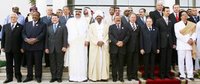
The last Arab Summit at Khartoum (City at the Elephant Trunk where the two Niles meet) was downgraded again and cut short to one day (Tuesday). Leaders of the major Arab states like Egypt, Iraq, and Saudi Arabia did not attend. The summit called for maintaining the unity of Iraq and verbal solidarity with Syria. It looked truly like a summit of, to use the late Anwar Sadat's term in a similar context, dwarfs. Most attendees did not look like leaders of sovereign nations, rather they looked like messengers sent over to uneasily deliver speeches they did not quite understand. Perhaps when your central obsession is to get power and cling to it for life, rather than to build and serve your nation....perhaps it shows. Anyway, smallnes permeated the place. The late Gamal Abdel-Nasser must be termbling....wherever he is now.
The leaders may have achieved something else as well, they may have manuevered to prevent a speech by Libyan leader Colonel 'Qadhafi, and thus they may have deprived the Arab audiences, and themselves as well, of the last chance at some entertainment. And some bizarre honest talk, at least by 'Qadhafi's standards. Dommage.
In the end, Saudi Arabia, slated to host the next Summit in 2007, declined that dubious honor. Which means that the poor Egyptians will have to put up with it again- no escape for Mubarak next time, eh?
Cheers
Mohammed

The last Arab Summit at Khartoum (City at the Elephant Trunk where the two Niles meet) was downgraded again and cut short to one day (Tuesday). Leaders of the major Arab states like Egypt, Iraq, and Saudi Arabia did not attend. The summit called for maintaining the unity of Iraq and verbal solidarity with Syria. It looked truly like a summit of, to use the late Anwar Sadat's term in a similar context, dwarfs. Most attendees did not look like leaders of sovereign nations, rather they looked like messengers sent over to uneasily deliver speeches they did not quite understand. Perhaps when your central obsession is to get power and cling to it for life, rather than to build and serve your nation....perhaps it shows. Anyway, smallnes permeated the place. The late Gamal Abdel-Nasser must be termbling....wherever he is now.
The leaders may have achieved something else as well, they may have manuevered to prevent a speech by Libyan leader Colonel 'Qadhafi, and thus they may have deprived the Arab audiences, and themselves as well, of the last chance at some entertainment. And some bizarre honest talk, at least by 'Qadhafi's standards. Dommage.
In the end, Saudi Arabia, slated to host the next Summit in 2007, declined that dubious honor. Which means that the poor Egyptians will have to put up with it again- no escape for Mubarak next time, eh?
Cheers
Mohammed
Arab Summit Peters Out at Khartoum
The Summit of Arab Leage members was downgraded and ended after only one day (Tuesday). Clearly this last summit did not achieve anything, even the usual hot air was toned down. The leaders of several major countries such as Egypt, Iraq, and Saudi Arabia were absent. The leaders present had no, well, presence. Most looked like they were sent by someone else to deliver prepared speeches which they did not understand. The main points of agreement were a call to maintain the unity of Iraq and solidarity with Syria. This was truly a summit of what Anwar Sadat used to call 'dwarves'. Even if all the leaders had been present.
The summiteers deprived the Arab peoples of some interesting verbal entertainment when they maneuvered to minimize the chances of Libyan leader Colonel 'Qadhafi giving his expected speech. That might have been the only interesting speech of the summit, at least for its entertainment value- it might even have included some honest albeit possibly bizarre points.
The summiteers deprived the Arab peoples of some interesting verbal entertainment when they maneuvered to minimize the chances of Libyan leader Colonel 'Qadhafi giving his expected speech. That might have been the only interesting speech of the summit, at least for its entertainment value- it might even have included some honest albeit possibly bizarre points.
Tuesday, March 28, 2006
Middle East Opinion #6
Federalism, Iraq, and Arab Dictators
The history of modern Iraq, from the moment of its forced creation by the British more than eighty years ago when they installed King Faisal on a new throne, has been one of a series of strong central governments. Only a strong state security system, including torture, mass uprooting, internal and external exile of opponents, could keep in power the minority regime that was forced on the population. The British introduced the rudiments of a parliamentary system, but they stacked the deck in favor of the Arab Sunni minority. The Brits did worry about it, but at the time they were told by the Sunni grandees of Baghdad that, “the Shi’as will go along. They are just simple peasants.” That same phrase is most likely being repeated today to U.S leaders and congressional delegations by modern smooth-talking Arab grandees, the Petro-potentates and dictators across the Arab World (I know this for sure now because Joe Klein told me in his latest Time Magazine column.)
The Brits, especially the King-makers Gertrude Bell and Percy Cox, were impressed by those smooth-talking grandees, those former sycophants of the Ottoman Turks, and they did not trust the majority Shi’as. Perhaps because of the strong and independent influence of the Hawza, the Shi’a Academy, perhaps they worried about some connection to Shi’a Iran (sounds familiar??) God only knows what they thought of the Kurds of the northern mountains. So, these smooth-talking, accommodating grandees of the central region were handed power. Of course at some point the Shi’as did have their Great Rebellion, but they were bombed and crushed by the British, along with the restive Kurds who were being set up for decades of ethnic cleansing. The grandees- the designated rulers- waited for the smoke and dust to settle in order to receive their new entitlement. The country lived with strongmen of one kind or another since that time. Still, rebellions broke out occasionally. There was a sort of stability, but it was the kind that no American would wish for his country. It was a stability based on the absence of freedoms, a stability enforced through state terror. Much like the kind of stability the Nazis brought to Germany after the roller coaster years of Weimar (I know, I know- this comparison has been overused, but it is a good one).
Many in the central-western part of Iraq support re-creation of a strong central government. And it is not really because they worry about the oil revenues- that is just the Western interpretation of the deeper tribal-sectarian forces at work. The presumption is that these strong rulers will still come from those regions as in the past. In order to have that outcome, the electoral system will have to be distorted again in favor of those regions, which would mean a new reign of terror.
This idea seems to have support in the Arab countries at large, and that is mainly because centralized authority is a lynchpin of the Arab political systems. For an un-elected leader, delegation of authority is considered dangerous. Most Arab leaders either have no deputies (for example, no vice presidents) or they have more than one deputy (two or three is not unheard of). There are two reasons for that: they do not want one ambitious man breathing down their necks, anxiously waiting his turn, perhaps being tempted to rush things and give fate a hand, and they all seem to think that they will live forever, regardless of the evidence to the contrary. Come to think of it, even some Arab monarchs have come to power through the overthrow of others, mainly relatives- literally palace coups.
Cheers
Mohammed

The history of modern Iraq, from the moment of its forced creation by the British more than eighty years ago when they installed King Faisal on a new throne, has been one of a series of strong central governments. Only a strong state security system, including torture, mass uprooting, internal and external exile of opponents, could keep in power the minority regime that was forced on the population. The British introduced the rudiments of a parliamentary system, but they stacked the deck in favor of the Arab Sunni minority. The Brits did worry about it, but at the time they were told by the Sunni grandees of Baghdad that, “the Shi’as will go along. They are just simple peasants.” That same phrase is most likely being repeated today to U.S leaders and congressional delegations by modern smooth-talking Arab grandees, the Petro-potentates and dictators across the Arab World (I know this for sure now because Joe Klein told me in his latest Time Magazine column.)
The Brits, especially the King-makers Gertrude Bell and Percy Cox, were impressed by those smooth-talking grandees, those former sycophants of the Ottoman Turks, and they did not trust the majority Shi’as. Perhaps because of the strong and independent influence of the Hawza, the Shi’a Academy, perhaps they worried about some connection to Shi’a Iran (sounds familiar??) God only knows what they thought of the Kurds of the northern mountains. So, these smooth-talking, accommodating grandees of the central region were handed power. Of course at some point the Shi’as did have their Great Rebellion, but they were bombed and crushed by the British, along with the restive Kurds who were being set up for decades of ethnic cleansing. The grandees- the designated rulers- waited for the smoke and dust to settle in order to receive their new entitlement. The country lived with strongmen of one kind or another since that time. Still, rebellions broke out occasionally. There was a sort of stability, but it was the kind that no American would wish for his country. It was a stability based on the absence of freedoms, a stability enforced through state terror. Much like the kind of stability the Nazis brought to Germany after the roller coaster years of Weimar (I know, I know- this comparison has been overused, but it is a good one).
Many in the central-western part of Iraq support re-creation of a strong central government. And it is not really because they worry about the oil revenues- that is just the Western interpretation of the deeper tribal-sectarian forces at work. The presumption is that these strong rulers will still come from those regions as in the past. In order to have that outcome, the electoral system will have to be distorted again in favor of those regions, which would mean a new reign of terror.
This idea seems to have support in the Arab countries at large, and that is mainly because centralized authority is a lynchpin of the Arab political systems. For an un-elected leader, delegation of authority is considered dangerous. Most Arab leaders either have no deputies (for example, no vice presidents) or they have more than one deputy (two or three is not unheard of). There are two reasons for that: they do not want one ambitious man breathing down their necks, anxiously waiting his turn, perhaps being tempted to rush things and give fate a hand, and they all seem to think that they will live forever, regardless of the evidence to the contrary. Come to think of it, even some Arab monarchs have come to power through the overthrow of others, mainly relatives- literally palace coups.
Cheers
Mohammed
Sunday, March 26, 2006
Middle East Opinion #5
Iraq Balance of Power, The Raj, and the Arab 'Hood
Peggy Noonan wrote an interesting article in OpinionJournal.com based on the old Lapierre-Collins book about Indian independence, partition and sectarian cleansing (March, 23). Interesting how history could turn on simple, often personal, events. Looking back, the partition of the Subcontinent has not been kind to Pakistan- it has been ruled for most of half a century alternately by military dictatorships or corrupt Islamic fundamentalists. Right now it is effectively split between the two forces, and neither seems to be powerful enough to claim absolute control. That seems to make some sense, since the raison d'etre of Pakistan was its separate Islamic identity. I cannot help thinking that India’s original huge Moslem minority (encompassing current Pakistan, Bangladesh, and those Moslems who were wise enough at the time to choose to remain Indians) would have been better off remaining a very influential part of a democratic India.
Lord Mountbatten, was in a hurry to complete the British pull-out, and he did the job as fast as he could. Louis Mountbatten, War Hero, Great Grandson of Victoria, favorite uncle of Queen Elizabeth, survived the bloody end of the Raj. He was killed three decades later by another conflict, ironically a West European sectarian conflict- one to the west across the Irish Sea.
There is no Mountbatten in Iraq today, nor can there be: neither Khlilzad, Negroponte, or Bremer, for all their talents, have been in that mold- the era of such powerful viceroys as Mountbatten and MacArthur is gone. The Iraq situation does not involve a withdrawal coupled with partition and transfer of sovereignty like India. Its own peculiarity also requires a more subtle approach to domestic politics than the one used in Japan.
One mistake of the Iraq War: it seems that the worst possible outcome envisaged at the time was the use of chemical or biological weapons by the Ba'athists. As it has turned out, the worst likely outcome should have been considered as well: a terrorist insurgency drawing on former regime loyalists, Arab Salafi jihadists, and vast amounts of money flowing freely from outside to finance this violent campaign. The sources of the many millions of dollars needed for this extensive campaign are still officially unknown. The goal is to plunge Iraq into open sectarian conflict and draw in other countries in the region. Once the power struggle in Iraq takes on regional dimensions, then the dynamics of the internal balance of power can be changed, actually it will be changed of necessity. Then it will probably spill over across Iraq's border into what Arab politicians these days like to term al-jewar, i.e the neighborhood- sort of a genteel-sounding Middle Eastern version of the 'hood.
Sectarian and religious conflicts have a way of raising (irrational?) passions that are difficult to control- in that respect the world has not changed much. That is an outcome probably many are not expecting in a region noted for its self-delusions. In this explosive case, even turning a blind eye to the flow of funds, materiel and men across borders is not doing the 'hood any good.
Cheers
Mohammed
Peggy Noonan wrote an interesting article in OpinionJournal.com based on the old Lapierre-Collins book about Indian independence, partition and sectarian cleansing (March, 23). Interesting how history could turn on simple, often personal, events. Looking back, the partition of the Subcontinent has not been kind to Pakistan- it has been ruled for most of half a century alternately by military dictatorships or corrupt Islamic fundamentalists. Right now it is effectively split between the two forces, and neither seems to be powerful enough to claim absolute control. That seems to make some sense, since the raison d'etre of Pakistan was its separate Islamic identity. I cannot help thinking that India’s original huge Moslem minority (encompassing current Pakistan, Bangladesh, and those Moslems who were wise enough at the time to choose to remain Indians) would have been better off remaining a very influential part of a democratic India.
Lord Mountbatten, was in a hurry to complete the British pull-out, and he did the job as fast as he could. Louis Mountbatten, War Hero, Great Grandson of Victoria, favorite uncle of Queen Elizabeth, survived the bloody end of the Raj. He was killed three decades later by another conflict, ironically a West European sectarian conflict- one to the west across the Irish Sea.
There is no Mountbatten in Iraq today, nor can there be: neither Khlilzad, Negroponte, or Bremer, for all their talents, have been in that mold- the era of such powerful viceroys as Mountbatten and MacArthur is gone. The Iraq situation does not involve a withdrawal coupled with partition and transfer of sovereignty like India. Its own peculiarity also requires a more subtle approach to domestic politics than the one used in Japan.
One mistake of the Iraq War: it seems that the worst possible outcome envisaged at the time was the use of chemical or biological weapons by the Ba'athists. As it has turned out, the worst likely outcome should have been considered as well: a terrorist insurgency drawing on former regime loyalists, Arab Salafi jihadists, and vast amounts of money flowing freely from outside to finance this violent campaign. The sources of the many millions of dollars needed for this extensive campaign are still officially unknown. The goal is to plunge Iraq into open sectarian conflict and draw in other countries in the region. Once the power struggle in Iraq takes on regional dimensions, then the dynamics of the internal balance of power can be changed, actually it will be changed of necessity. Then it will probably spill over across Iraq's border into what Arab politicians these days like to term al-jewar, i.e the neighborhood- sort of a genteel-sounding Middle Eastern version of the 'hood.
Sectarian and religious conflicts have a way of raising (irrational?) passions that are difficult to control- in that respect the world has not changed much. That is an outcome probably many are not expecting in a region noted for its self-delusions. In this explosive case, even turning a blind eye to the flow of funds, materiel and men across borders is not doing the 'hood any good.
Cheers
Mohammed
Friday, March 24, 2006
Middle East Opinion #4
Islamic Fundamentalism,. the Iraq War, Chianti, Etc

During the 1970s secular pan-Arab and quasi-socialist movements dominated the political debate in the Arab World. In the oil monarchies of the Persian Gulf local branches of the movements were giving the rulers some grief. Annoying questions were being raised about the use of oil revenues, financial corruption, etc. There was even talk about democracy, although it is doubtful what kind of democracy these movements believed in.
The rulers realized there was a huge pool of tribal people not interested in pan-Arab secularism. They learned to exploit the tribal, sectarian and ethnic divisions of their societies. They encouraged and financed new alliances that were a marriage of convenience between tribalism and Islamic fundamentalism. This approach, of course, had worked in Saudi Arabia for many decades, and was perfected by old Ibn Saud (King Abdul-Aziz), who unified much of the Arabian Peninsula early in the 20th century. Whether that was for good or bad depends on one’s perspective, whether one is a Hasawi Shi’a sitting atop the oil fields but nor reaping much benefits from them or a Wahhabi in Najd sitting atop a desolate desert but getting rich from the revenues of the same oil fields. Ibn Saud, whatever one thinks of the absolutely corrupt and schizophrenic system that inherited his domain, was a puritan and had elements of greatness. He is perhaps the closest the Arabs have had to a true warrior-leader in modern times. He was not a patriot like Garibaldi- he was interested in power for himself and his clan. Besides, I understand that Ibn Saud preferred the fresh milk of his Noo’q she-camels to a hearty Chianti with his Mutton a la Parmesana.
Islamic fundamentalists generally do not give a jella, that is a camel chip to most of you, about political freedom, free speech (religious freedom is a no no), or financial corruption. As long as the basic tenets of the faith are enforced, and as long as they control the educational system. As long as men and women are separated to keep at bay the ever-present evil of temptation. Under the prevailing arrangements, the ruling potentates and their supporting oligarchies can do whatever they want with the oil revenues, which they certainly do, as long as they give the Islamo-political societies the freedom of organization, fund-raising, and the control of education (perhaps the UAE is one glaring exception to all this). The fundamentalist Salafis presumably rely on quotes from someone called Abu Huraira (Father of Little Cat), a supposed contemporary of the Prophet Mohammed, to justify their alliance of convenience with the rulers. Quotes attributed by that ancient gentleman to the Prophet, such as “He who sees something despicable in his ruler should bear it, as long as the prayers are held. For he who even slightly disassociates himself from obedience to the sovereign and dies in this condition shall die the death of Jahiliyya (i.e. a heretic).”
Of course the al-Qaida have clearly departed from this philosophy now, perhaps realizing that all those ancient Semitic prophets, whether Arab or Jew, were in fact rebels against the existing order of their day.
But what about their Salafi friends and admirers in the Persian Gulf states?
The end of the Afghan war against the Soviet-backed regime also ended the honeymoon between the rulers and tribal-fundamentalists, although the marriage itself has continued. The young people who went to the war came back toughened, more indoctrinated, and less willing to compromise. They had been out of sight and supervision of their allies, the rulers, and had become independent. A sort of War of the Roses (the Hollywood version) has been going on for a while now. How will it all end? Will the new Salafi-Ba’athist Jihad in Iraq revive the faltering marriage?? Do we have the makings of a new threesome here? A ménage-a-trois in Iraq of Jihadists, Ba’athists, and Petro-money??
Cheers
MHG/phd
Subscribe to:
Posts (Atom)
